When many people first look at a Chinese landscape painting, they may mistake it for a landscape photograph that does not quite look like the real thing. In fact, the focus of landscape painting is often not to copy nature, but to arrange a spiritual space that one can wander through and dwell in by means of brush and ink, mountains and rocks, trees, clouds and water, and blank space. According to publicly available sources, traditional painting theory often stresses the idea of “learning from the external world and letting the heart become the source,” meaning that painters both observe nature and transform their inner feelings into the painting. For beginners, appreciation can start with three key terms: mood, texture strokes, and composition.
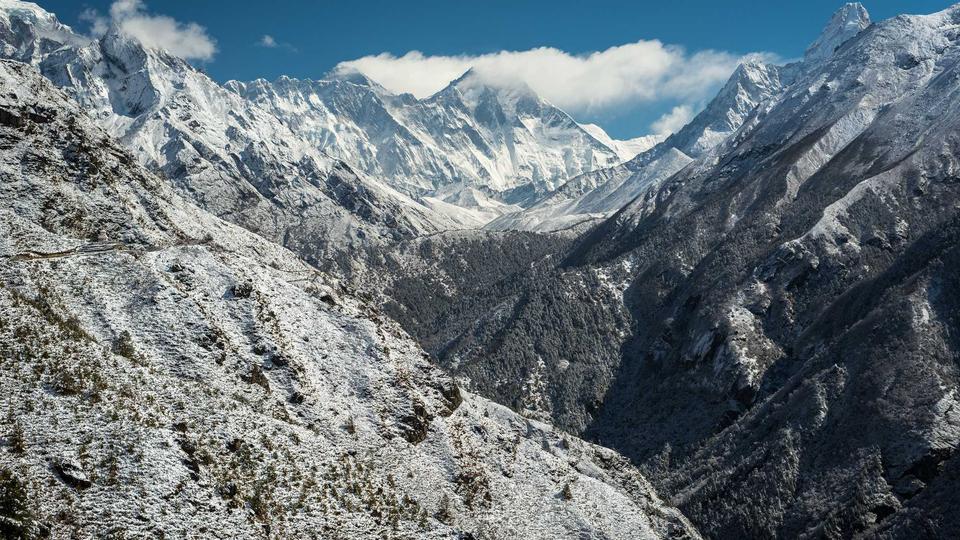
I. Mood: First Notice What the Painting Makes You Feel
Mood is the soul of Chinese landscape painting. It is not an abstract slogan, but the feeling of quiet, vastness, depth, wildness, or clear moisture that arises in the heart after a first glance. If a painting merely piles up mountains, rocks, and trees without breath, it can easily feel “full but stifling.” Conversely, measured density and appropriate blank space can help viewers enter the painting’s world.
To read mood, you can begin from several angles:
- Distance: Does the painting have a sense of space opening layer by layer, making one think that beyond each mountain there is another mountain?
- Stillness: Is there no noisy feeling? Clouds, water, empty pavilions, and small boats often help create quiet.
- Emptiness: Does blank space read as cloud, water, or mist, rather than simply unfinished areas?
- Wandering: Can you imagine walking into the painting along a mountain path, a bridge, or a shoreline?
According to publicly available sources, literati painting especially values a space that is “worth wandering through and worth dwelling in.” Readers need not rush to judge whether a painting is “good”; they can first ask themselves: Would I want to stay here for a while?
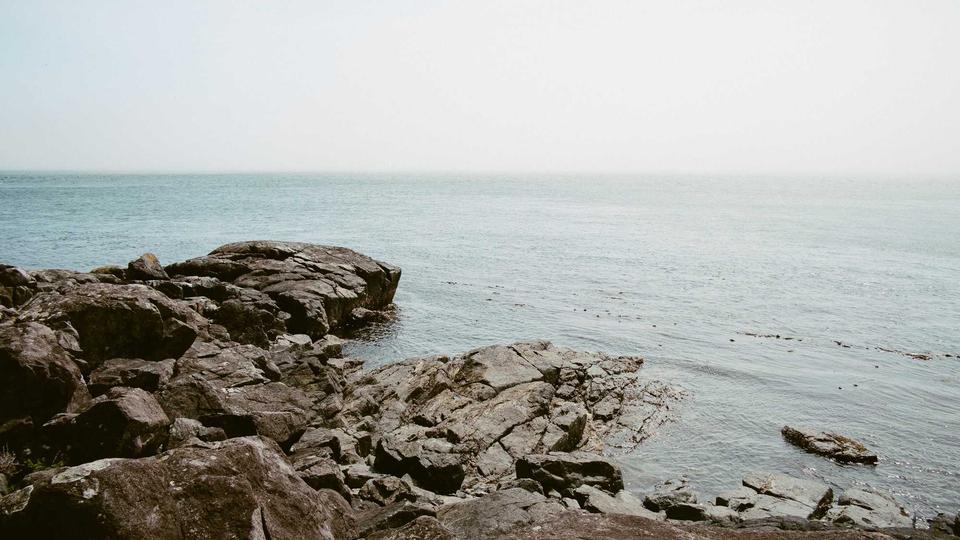
II. Texture Strokes: How Mountains and Rocks ‘Grow’
If mood is the breath of a painting, texture strokes are the “skin” that supports the structure of mountains and rocks. In Chinese landscape painting, mountains are not rendered through light and shadow to create three-dimensional form; instead, line and ink tone express texture, material feel, and the facing or turning of yin and yang. According to publicly available sources, there are many kinds of texture strokes, and different types suggest different mountain forms and regional characters.
How Common Texture Strokes Feel
- Hemp-fiber strokes: Lines are relatively soft, like hemp threads spreading outward, suitable for expressing the moist earth hills and lush vegetation of Jiangnan.
- Axe-cut strokes: Brushwork is more forceful, like an axe splitting stone, suitable for hard cliffs and a sense of power.
- Folded-ribbon strokes: Turns are angular and hard, like a folded ribbon, often evoking flat slopes, stone banks, and cool structures.
- Mi-dot strokes: Dotted ink suggests misty rain, suitable for Jiangnan cloud-covered mountains and humid air.
- Rain-dot strokes: Dense dotted brushwork, as if rocks are wetted by rain, giving a thick and vast feeling.
When beginners look at texture strokes, they need not memorize names. They can imagine mountains and rocks as different materials: some like earth slopes, some like rock walls, and some like mountain bodies softened by rain. Light brush and ink make mountains elegant; heavy ink makes mountains thick; angular lines make rocks hard; dense dotting makes mountains moist. According to publicly available sources, texture strokes come both from observing nature and from the accumulated summaries of rock textures by painters across history.
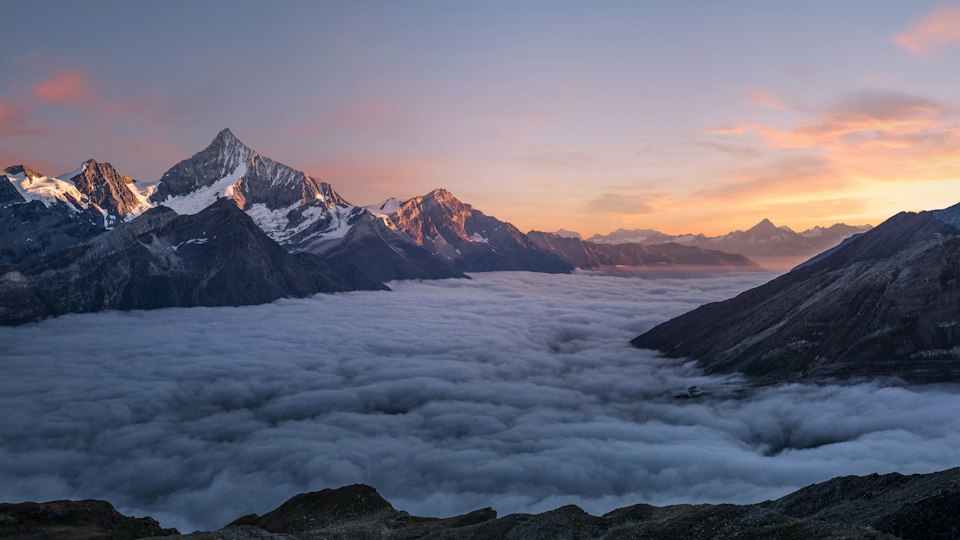
III. Composition: How a Painting Arranges the Eye
Chinese landscape painting emphasizes “planning the placement.” Composition does not mean arranging scenery evenly across the surface; it means ordering primary and secondary elements, solid and empty areas, opening and closing, near and far. According to publicly available sources, traditional landscape painting often organizes space through the “three distances”: high distance invites the viewer to look upward, deep distance lets the viewer peer behind mountains, and level distance lets the gaze unfold. When looking at a painting, readers can follow these spatial relationships through the picture.
Key Points of Composition
- Central peak: A painting usually has one most important mountain or subject, like the main idea in an essay.
- Host and guests: Other rocks, trees, houses, bridges, and small boats are supporting elements and should not compete with the central peak.
- Opening and closing: Mountain forms, water movement, and cloud movement expand and contract, like breathing.
- Solid and empty: Solid areas are mountains, rocks, and trees; empty areas are clouds, water, and blank space. The empty parts are not nothing; they let spirit and rhythm flow.
- Paths: Mountain trails, shorelines, bridges, pavilions, and boats are often the entrances through which viewers enter the picture.
A good composition often lets the eye move naturally: it may start with a nearby tree or rock, pass through a bridge, a house, and the foot of a mountain, then unfold upward or into the distance along the mountain form, and finally be gathered by clouds, water, or blank space. If the picture is too full, the eye has nowhere to rest; if it is too empty, it may feel loose. According to publicly available sources, inscriptions and seals are also part of composition, and when placed well they can balance the painting.
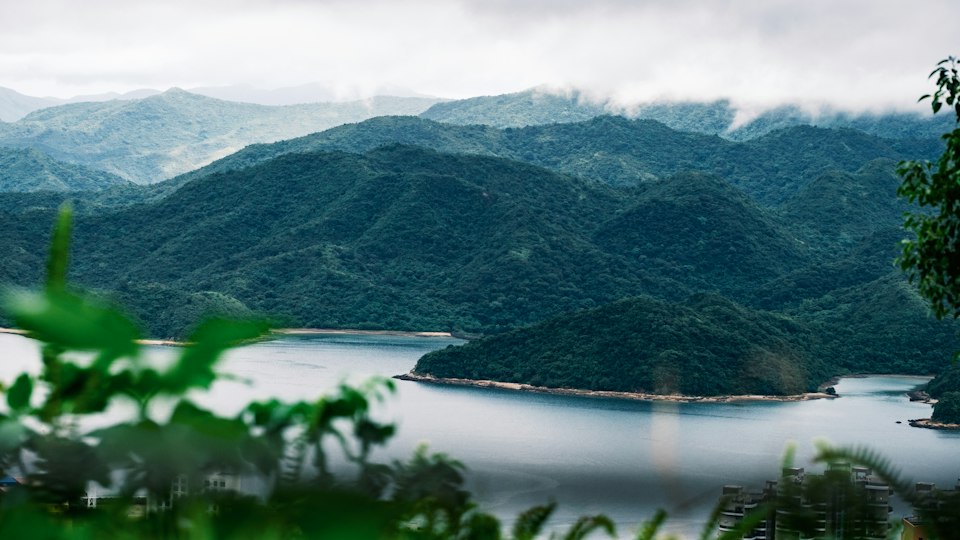
IV. Actionable Steps for Appreciation
A Four-Step Exercise
- Step one: look at the whole from a distance. First observe the “breath” of the painting. Ask: Is it grand, cool, moist, vast, or peaceful? Do not rush to find details.
- Step two: find the central peak and the entrances. See which mountain is heaviest, tallest, or most complete; then look for paths, bridges, boats, or houses that can lead you into the picture.
- Step three: look closely at rocks and trees. Observe whether the lines are soft or angular, whether the ink is light and moist or heavy, and whether the dotting is dense. Try to decide which type of texture-stroke feeling it is closer to, rather than memorizing names.
- Step four: step back and look at solid and empty. Notice where the painting is dense, where it is sparse, and where there is blank space. Ask yourself: Do clouds or water divide the picture? Does an inscription press down a corner? Can the painting still breathe?
V. Beginner Checklist
Quick Self-Check
Next time you see a Chinese landscape painting in an album, an exhibition, or on a phone screen, use this checklist to quickly judge whether you have really “entered” the painting.
- Can I describe the painting’s overall feeling in a few words?
- Can I find the central peak, foreground, middle ground, background, or layers of clouds and water?
- Do the rock textures remind me of natural materials such as earth, stone, rain, mist, grass, or trees?
- Does the painting contain places where one can walk, pause, or dwell?
- Does the blank space read as cloud, water, mist, or sky, rather than wasted emptiness?
- Do inscriptions, seals, trees, rocks, and bridges echo one another instead of fighting for attention?
- After looking, am I willing to look again and discover new details?
Getting started with Chinese landscape appreciation is not treating a painting as a quiz of knowledge; it is training a way of seeing: first notice the breath, then brush and ink, and finally arrangement. According to publicly available sources, landscape styles have changed greatly across dynasties, but a common thread is the unity of observing nature and expressing the inner self. For ordinary readers, there is no need to understand a famous painting all at once. Once you begin to notice mood, texture strokes, and composition, you have already stepped across the threshold.
Disclaimer: This article is compiled from publicly available online sources for educational purposes only and does not represent the official position of Guanshan Academy. If you believe your rights have been infringed, please contact us for removal.
Contact: chenxj.g@gmail.com