At ten o’clock at night, you only meant to pick up a book and leaf through a couple of pages.

Your phone is full of saved “must-read introductions to traditional Chinese culture.” On your shelf are a few volumes, too—beautiful covers, daunting prefaces. You pick one up, then put it down again.
It isn’t that you lack patience. It’s that the classics are often introduced as too lofty: read the whole book, understand every allusion, be like a scholar.
But beginning can be closer at hand. Today, instead of ranking book lists, let’s first talk about how to read the three pages at your desk.
Start from Life, Not from “Must-Read” Lists
Have you ever saved lots of book lists, only to open them and fear you won’t understand?
That fear mostly comes from the words “must-read.” They place the classics at the doorway and tell you that you must enter first, without telling you which room you might like to sit in for a while today.
You can ask the opposite question: In your life lately, what makes you want to be calmer, more deliberate, or more refined?
If you want less restlessness, look at elementary cultivation and rules; if you want to understand human feeling, look at rites and customs; if you want to learn how to appreciate a good line of poetry, look at literary expression; if you want your eyes to settle, look at mountains and waters.
Something you can do today: write three lines in your notes app—“I want to steady my emotions,” “I want to understand everyday etiquette,” “I want to learn to appreciate a good line of poetry.” Then choose one book. No need to rush into a complete set.
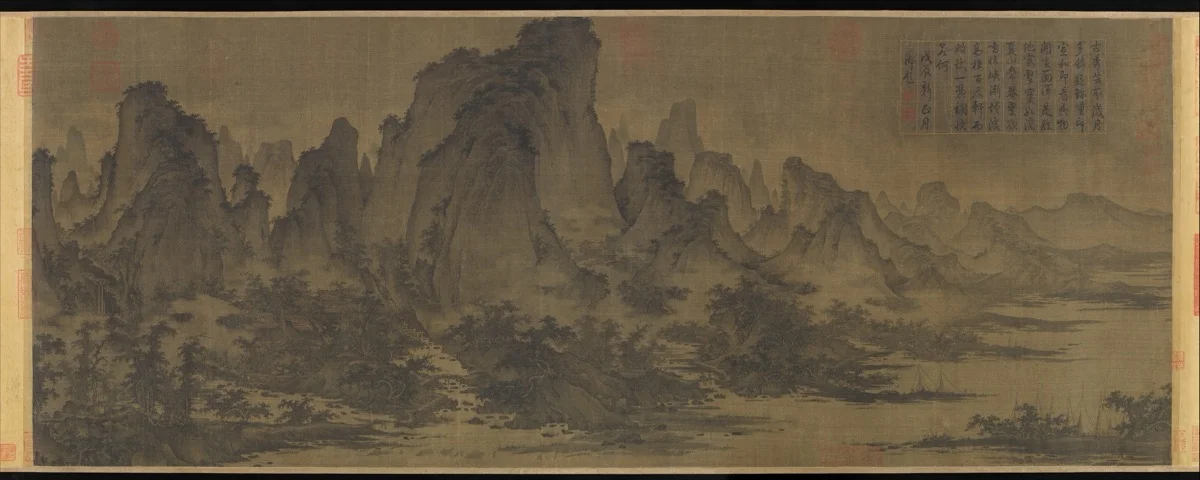
Illustration · Morning Mist over Mountains
Four Reading Lists: Choose Only Slim, Readable Introductions
Traditional culture is not a narrow path. When starting out, you can look in four directions.
For elementary cultivation and rules, choose short introductory texts with notes and clear paragraphing. They may not be profound, but they can clarify the basic measures of “morning and evening, sweeping and tidying, treating others, and being with yourself.” They suit people who feel a little unsettled and want to put daily life in order.
For poetic sensibility and literary expression, choose quatrains, short lyric poems, and brief prose selections. No need to rush to memorize, and no need to read too much at once. The standard is simple: is there a line that makes you pause, as if it has spoken a feeling you had not voiced?
For rites, customs, and life, choose short pieces about everyday human feeling, seasons, feasts, hosting guests, and forms of address. Reading them is not to put on old airs, but to know when to be steady, when to be warm, and when to slow your words.
For mountains, waters, and the spirit of painting, choose short travel essays, introductions to painting theory, and small poems inscribed on paintings. They are for after work, when you do not want noise. You need not go to deep mountains; with a window, a tree, and a cup of tea at your desk, you can read slowly.
Something you can do today: from the four categories, choose only one. Search in a library or a book-borrowing app for “selected edition,” “annotated,” or “vernacular translation.” Borrow a slim volume first; no need to gather the whole set.
| What do you want to settle right now? | Direction to try | What an introductory book looks like | A step you can take today |
|---|---|---|---|
| Your mind feels scattered, and you want to steady it | Elementary cultivation and rules | Short, annotated, clearly paragraphed | Find a short original passage about speech, conduct, or daily routine; read one sentence and stop |
| You want to learn how to appreciate a single line | Poetic sensibility and literary expression | Quatrains, short lyric poems, short selections | Circle a short poem you would like to copy out |
| You want to understand everyday human feeling and etiquette | Rites, customs, and life | About seasons, hosting guests, forms of address, everyday measure | Find one detail about hosting guests you can use tonight |
| You want your eyes to settle | Mountains, waters, and the spirit of painting | Short travel essays, introductions to painting theory | Glance out the window, then read one page about a nearby scene |
Illustration · Lake Light at Dusk
Choosing an Edition: Use the Table of Contents and Notes, Not Fame
The same original line can feel very different in different editions.
A bigger name is not always better; the key is whether you can follow it into the text.
You can look at three places first: preface, table of contents, and notes. Does the preface give the reader a path? Can you see from the contents what has been selected? Do the notes explain words, institutions, and background?
Beginners are better suited to editions with vernacular translation and annotation, footnotes, and clear section introductions. If from the start it is full of textual criticism, technical terms, and dense notes, set it aside for now. It is not that the book is bad; it is just that you do not need something so heavy right now.
There is also a method for trial-reading three pages: on the first page, see whether the original text is laid out comfortably; on the second, see whether the notes can explain a difficult word; on the third, see whether the section introduction tells you why this passage is worth reading.
Disclaimer: This article is compiled from publicly available online sources for educational purposes only and does not represent the official position of Guanshan Academy. If you believe your rights have been infringed, please contact us for removal.
Contact: chenxj.g@gmail.com