By the end, you’ll use the three steps—trigger, action, and feedback—to design daily practices for boxing, reading, music, and reflection. Take the environment checklist with you, and record one valid check-in tonight.

1. When a habit falls off track, it’s usually because the trigger isn’t set well
A habit usually breaks not because you suddenly don’t want to do it today. More often, you have given yourself a start that is too broad. “Practice boxing today,” “read when I have time,” “reflect as much as possible”—these are slogans, not switches.
You can change “practice boxing today” to “after I plug in my phone to charge, first lay out the exercise mat.” The former waits for mood; the latter waits for an event. Once the event happens, the body can take over the action.
The value of a trigger is that it does not ask you to judge your state. It only asks you to complete a very short preparatory action. Once that preparatory action happens, the full practice has a chance to appear.
Write one trigger-based daily practice today
The formula is simple: existing event + fixed location + two-minute action. Don’t write a wish; write a switch.
- ☐ Choose an event that almost never misses a day: coming in the door, pouring hot water, charging a device, brushing your teeth, closing the laptop.
- ☐ Attach a specific place after the event: the desk, beside the instrument, by the exercise mat, in front of the reflection journal.
- ☐ Shrink the action to two minutes: lay out the mat, open the book, get the sheet music, write one line.
- ☐ Put it where you can see it: lock screen, sticky note, paper on the desk. Write actions, not slogans.
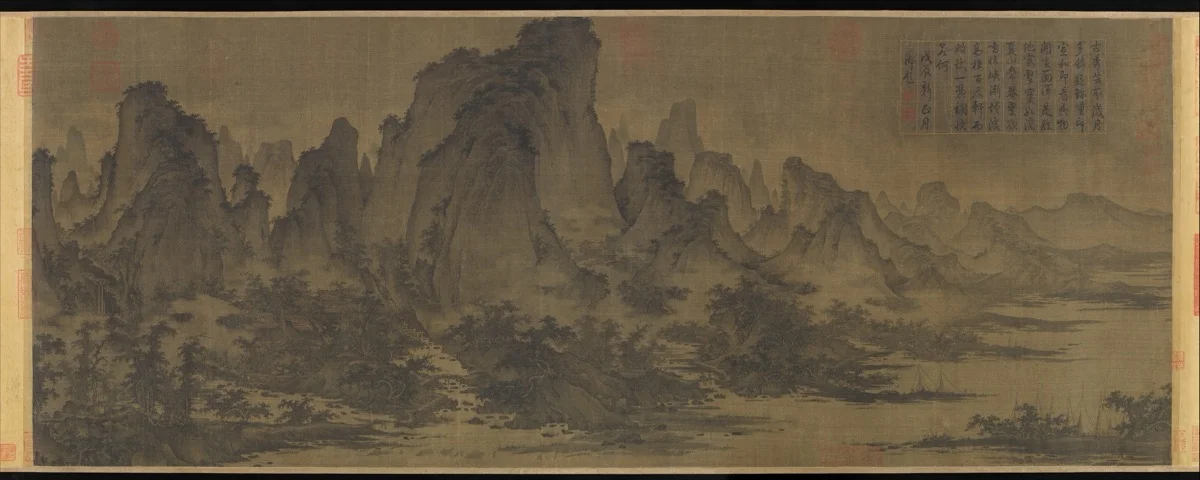
Illustration · Soft Green Valley
2. Four steps to build a daily-practice switch
You can copy the four steps directly: choose an anchor, arrange the environment, shrink the action, record feedback. Do not reverse the order. Many people start by talking about persistence, only to realize later that the environment is too burdensome and the trigger too vague.
Step 1 Choose an anchor: use something that already happens
The anchor must be stable. Changing shoes when you get home is more reliable than “evening.” Placing your phone on its dock is more specific than “before bed.” After pouring hot water, placing the cup nearby is closer to action than “when I have time.”
You can ask yourself: Does this event happen every day? If it often changes, replace it. If the event itself is too late, such as “after checking my phone,” it may already have distracted you.
Step 2 Arrange the environment: move the action forward
The environment should make the decision for you. Open the book to the bookmark, lean the exercise mat against the wall, lay out the sheet music, and place the reflection journal beside the computer. The goal is to start within three steps after the anchor happens.
If the props have to be fetched, searched for, or arranged, don’t blame willpower first. Change the placement first. From daily observation, broken habits usually come from tiny friction before starting.
Step 3 Shrink the action: first, only flip the switch
Do not demand a full boxing routine, a whole chapter, a complete practice session, or a long reflection at the beginning. The first time, only open it, sit down, or pick it up. Just spread the exercise mat. Just open the book to the bookmark. Just open the instrument lid. Just write one line in the notebook.
Shrinking the action until it is very small is not cutting corners. It protects the start rate. When the start rate rises, your state gradually follows.
Step 4 Record feedback: only check that the trigger was done
Feedback is not evaluation. After completing it, simply check that the trigger was done. Three seconds is enough. Do not write “today’s state was poor” or “I must make it up tomorrow.” That turns check-ins into an extra burden.
You can simply record: “Triggered.” If you did not do it, record: “Not triggered.” If you miss a day, no explanation is needed; return to the anchor tomorrow.
Illustration · Misty Still Lake
3. Boxing, reading, music, and reflection: four trigger examples
The four examples below can all be adapted into your own version. There is only one principle: use an existing event to lead into an extremely short action.
Boxing: after coming home and changing clothes, once changing is done, lay out the mat and do three basic moves
The anchor is finishing changing clothes. The action is laying out the exercise mat. The minimum is three basic moves; a full routine is not required. If your state is good, add more; if it is poor, finish laying out the mat and the basic moves, then stop.
Try today: come home, put down your bag, lay out the mat, practice standing meditation for one minute, or do only three opening movements. Afterward, check that the trigger was done.
Reading: after washing up, once the toothpaste cap is closed, open the book to the bookmark and read one passage
The anchor is closing the toothpaste cap. Place the book near the sink in advance, with a bookmark marking the next starting point. Read one passage and stop. If you can’t stop, that’s okay too. Try today: read one passage, then fold the page corner to mark tomorrow’s starting point.
Music practice: after clearing the dishes following dinner, once the kitchen light is off, open the score and practice only four measures
The anchor is turning off the kitchen light. Open the sheet music in advance to the four measures. Practice only four measures; do not chase the whole piece. Expand once your hands are familiar; if your state is poor, go through them slowly once.
Try today: do not demand perfect pitch; first practice the four measures slowly once. Afterward, record: “Four measures triggered.”
Reflection: after closing the laptop or when the tea has cooled, write a three-question checklist within ten minutes
The anchor is closing the laptop or the tea cooling. Open the reflection journal in advance. The three questions can be very short: What worked today? Where did I procrastinate? What is the lightest step for tomorrow...
Disclaimer: This article is compiled from publicly available online sources for educational purposes only and does not represent the official position of Guanshan Academy. If you believe your rights have been infringed, please contact us for removal.
Contact: chenxj.g@gmail.com